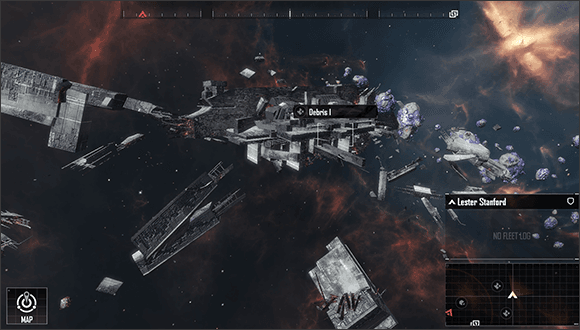
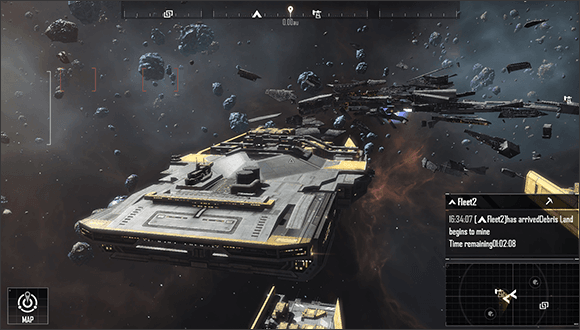
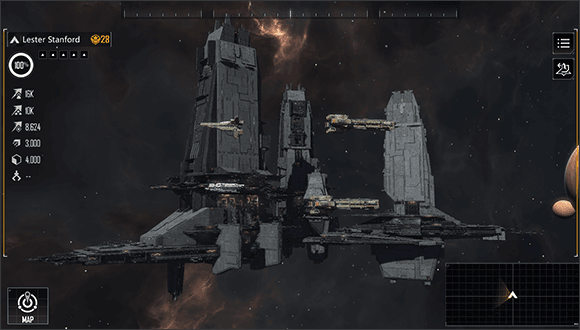
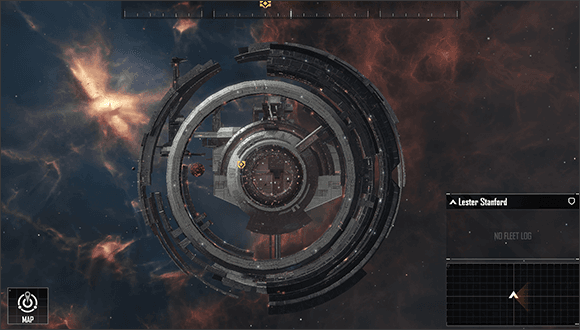
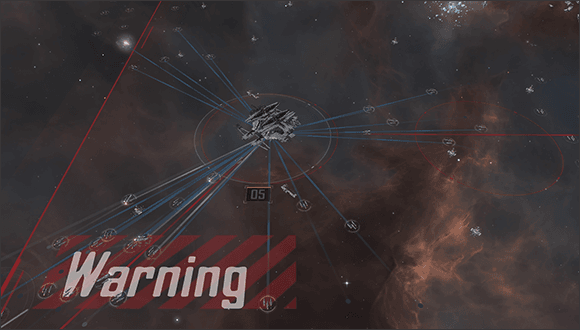
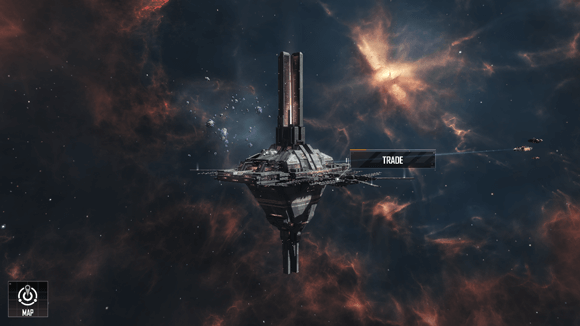
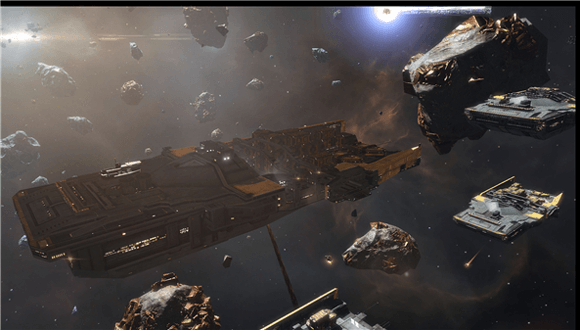
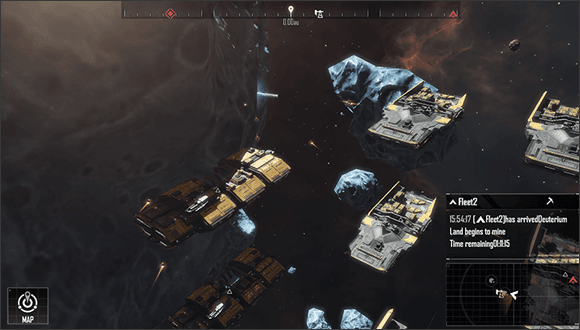
“Lagrange Network has cultivated multiple organizations, some of which were born in the currents of thoughts, some of which are naturally bounded by blood ties, some were established to cope with extreme environment of the space, while some were forged for ideals. These organizations in the space have been sparkling, colliding and encouraging each other, constantly breeding new energies to drive the evolution of our organization structure in return. ”
- Studies of Poly-organization and Ideological Effects, Sancta Familia Culture Press
Milky Way at the Terran Sphere Era looks so tranquil and peaceful, where the ternary structure consisting of the government, enterprises, and social institutions has sustained a stable ecology. The development of Warp Drive preluded the Great Navigation Era, when the spaceports were widely built in the solar system, pushing the frontier of the world further and further. At the same time, organizations within the Terran Sphere were widespread in the whole solar system to with explorers. As the distance increased, delay messaging had become an inescapable chain that choked the administration of the organizations, which were all in face of a tough test of time.
To catch up with the wave of the solar system exploitation, various organizations hurried to develop their branches on different star orbits and allowed flexible policy-making. In this case, currents of thought were stimulated at the premise of the grassroots autonomy and the multi-organizational theories started to prevail. Some small structures began to share the limelight. Unlike conventional large organizations, they were more flexible and streamlined in the Great Navigation Era without heavy structure. Just as an old saying in the Terran Sphere: “It’s easier for a small boat to turn round”.
The Gold Rush Era ushered in, numerous explorers set their feet to unknown star systems with the trend of large two-way stargates construction. In this scenario, cross-system messaging seemed to take forever to transmit, so the old organizational structures were increasingly difficult to be held together. The communication channels and volume of Lagrange Network were severely limited, and had repercussions on every corner of the organizational ecology, compelling the evolution and upgrades of different structures.
Some of them upgraded with the diverse ideals trending at that time and evolved accordingly, obtaining the ability to fast seize and accumulate resources to take up in a simple structure - Clan. Trujillo family is just an example. They maneuvered among different forces, established Sacrum Chu Imperium finally and left remarkable fortunes and legacy thanks to the close cooperation of members. Hayreddin Clan of the same period, not as glorious as Trujillo though, has been active from the Gold Rush Era till now and become even more stronger by upholding the idea that “Dive deep cautiously” for Lagrange Network researches.
During the age of warfare after Sacrum Chu Imperium collapse, militarism were emphasized in several organizations, escalating the conflicts among them. Therefore, another structure that stressed more on military was born - Guild. Forces who transferred to guilds the earliest soon stood out and have grown stronger to Germanicus Corps and Ares Corps known nowadays, which have been developing and upgrading for fights since their births.
The chaotic era was finally concluded with the restart of Dawn Accord and establishment of Arbiter Committee. Explorers started their journey in new systems, so they united as Unions to cope with potential risks.
“The organization itself doesn’t stay invariable but has been splitting for wounds, while rebuilding and evolving during self-healing”, commented by Cannon Kim, Chief the General Staff of Ares Corps, must be the best interpretation of the structural evolution. The impressive legacy for the evolution by history has been well-preserved in Post-Lagrange Era, Studies of Poly-organization starts prevailing in the Lagrange Network. Explorers will take an initiative to evaluate which structure suits their needs best among Clans, Guilds, and Unions with various focuses, then practise the Studies of Poly-organization. The reform of multi-organizational ecology finally comes.
Lagrange Network is diverse and immense, as developer, we have been dedicated to providing you with richer social structures and relevant gameplay in addition to daily updates. Three different organizations will be introduced to Lagrange Network - Clan, Guild and Union, as well as new gameplay - Community. The preview of the new gameplay will be divided into 4 parts, and this article has introduced you the history and background and the second one will be more detailed about the gameplay in developing: Brand new gameplay about talents, clans, guilds, unions and operations are on the way, please stay tuned!
Later in the Galactic War, the star HD232b at the center of the Fire Seeker System had an abnormal emission of high radiation, affecting almost the entire star system. Above 70% of the cities, space stations, buildings, and fleets system-wide received severe damage, so did the protection facilities of the L893 Gate, making the stargate unable to run. The stellar emission phenomenon continues till now, and the entire star system has already been classified as a "Danger Zone." Some factions even closed the relevant nodes connecting to the Fire Seeker System in the Lagrange Network.
In the following decades, this phenomenon occurred and caused widespread devastation in multiple star systems. According to the Report on the Reasons for High Radiation Emission in Some Star Systems and their Network Loss Situation, there are abnormal changes in space warping at the Lagrange points. It may affect the gravity at the core of stars, lead to the high-energy emission from the interior of them irregularly, and thus cause severe damage to the entire star system. This phenomenon is academically called "Space Warping Vibration," also commonly known as "Warping Reverberation."
From the intel we have, there is a set pattern for the abnormal stellar activity. It can be divided into the Rising stage, Peak stage, and Declining stage. The scope of the radiation zone in a star system will change with the intensity of the stellar activity. During their abnormal activity, stars emit lots of high radiation at intervals hindering the operation of cities, space stations, and fleets. Some of the planets can block stellar jets so that the areas behind them are not susceptible to the high-energy emission from stars. You can take these areas as your security zones.
The Antonios Consortium was also affected by the disaster. Some of the star systems run by them have already begun to have "Space Warping Vibration." Radiation of high levels is emitted at irregular intervals, affecting the star system environment. The consortium's management decided to transfer the valuable assets out of these star systems, including large amounts of experiment data, as soon as possible. Therefore, the Data Rescue Agreement has been issued to recruit experienced explorers to rescue experiment data from these star systems fulls of dangers.
As the buildings in different star systems will become ruins after being continuously damaged by high radiation jets, it is necessary to rescue and migrate the important data stored in the Experimental Center and the Observation Station as soon as possible. Once the space station turns to ruins, it will no longer be able to house and support the crew as it used to. However, there will still be lot of resources, repairable shipwrecks and important experimental data to be recovered by explorers. These undiscovered data in the ruins are the focus of all forces in the star systems in their hunt.
The "Project Garden" planetary ecological transformation experimental program led by the Antonios Consortium has been carried out in five phases on hundreds of star systems, but some star systems are difficult to survive due to abnormal Stellar Activities that lead to the deterioration of the galactic environment. Most areas of those star systems have been abandoned, and many important data were buried in the ruins. \nThe goal of this agreement is to rescue planetary experiments and observation data from deserted star systems that were affected by the "warping reverberation".
As more and more star systems began to build Lagrange Gates in the same way (launch a large number of beacons for testing the safety and pressure of passing the nodes), such a scene appeared in star systems one after another. In the heat of developing Lagrange Nodes, the "Beacon Festival" began to spread to every corner of the galaxy.
"Twinkle twinkle little star, how I wonder what you are?"
—A popular lullaby in Terran Sphere
During the beacon test phase of the "Otherworld Project", beacons were continuously launched into space. These beacons traveled through the under-studied Lagrange Nodes to explore and record star systems on the other side, collecting a lot of valuable data and information for exit positioning experiments. After decades of full preparation, at the beginning of the Phase II implementation, 2,347,260 huge beacons with long life were continuously launched into the channel to test the stability and pressure capacity of the channel. Seen from the ground, these huge beacons formed streaks of light in the sky that kept shining for a whole year. So the people on earth gave them a poetic name: Wishful Lights.

Privacy Policy, Terms and Conditions
©1997-2022 NetEase, Inc.All Rights Reserved
Contact Us: lagrange@global.netease.com
Privacy Policy, Refund Policy


