Lagrange Generation Legacy Gameplay Preview III

2023-07-31

Dear Explorers, Greetings!

In our previous overview, we covered the gameplay and acquisition of Strategic Assets such as items, equipment, and collections. Now, we'll detail the effects of the equipment and items.

Tactical Item Detailed Description

Tactical Items are disposable technical weapons that can be delivered to the Explorer's operations, buildings, or fleets, offering a range of diverse strategic and tactical advantages.

1. The Space Operation Planning Coordinator, when applied to activated operations, reduces the Action Points consumed when the Explorer's fleet targets these operations for action.
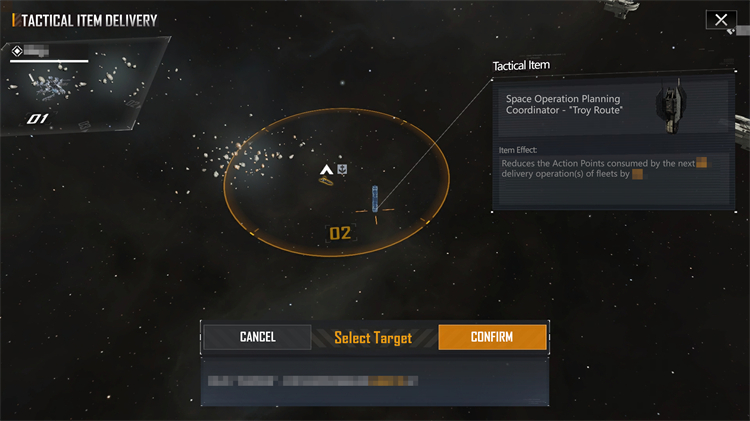
 

(In development. Does not represent the final quality of the game.)

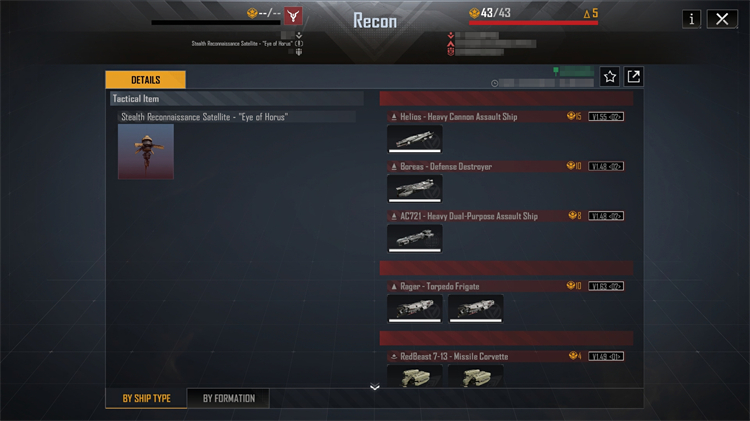
2. Reconnaissance Satellite can be delivered to the Explorer's operations, where it surveys non-friendly fleets within the Operation Area and gather crucial fleet formation information.
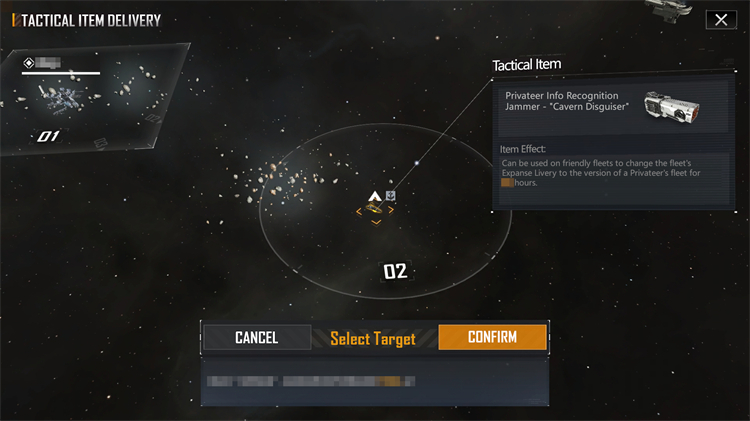
3. Privateer Info Recognition Jammer can mask a fleet, enabling it to be identified as a privateer fleet.
 

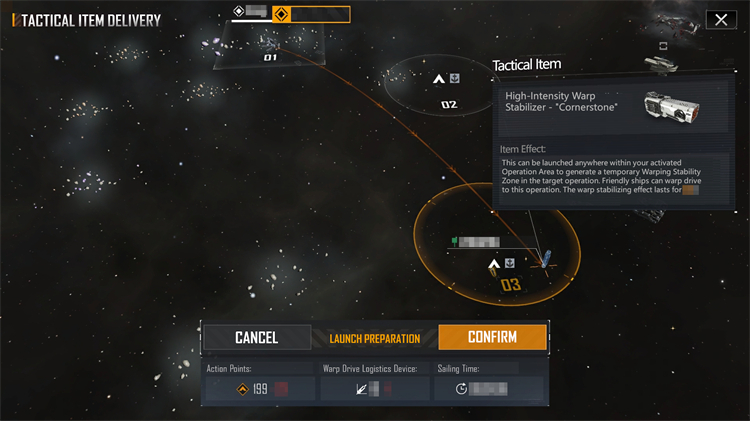
4. High Intensity Warp Stabilizer can create temporary Warping Stability Zones within the area of the Explorer's activated operation, enabling friendly fleets to target the operation and travel through Warp Drive.
 

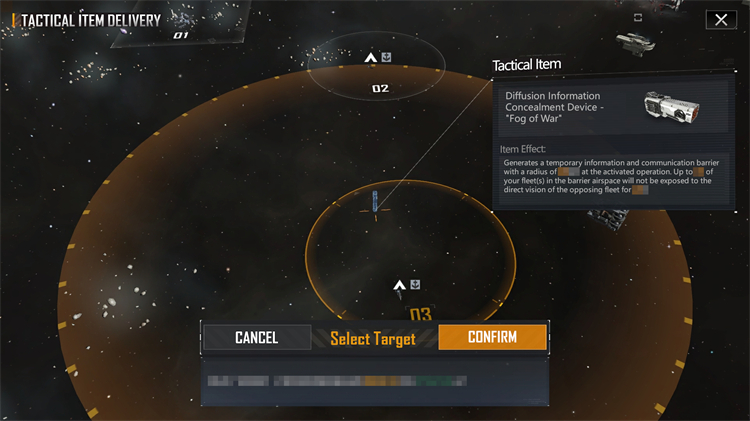
5. Diffusion Information Concealment Device can create a temporary wide-area information and communication barrier, preventing friendly fleets within its boundary from being detected by enemy Explorers.
 

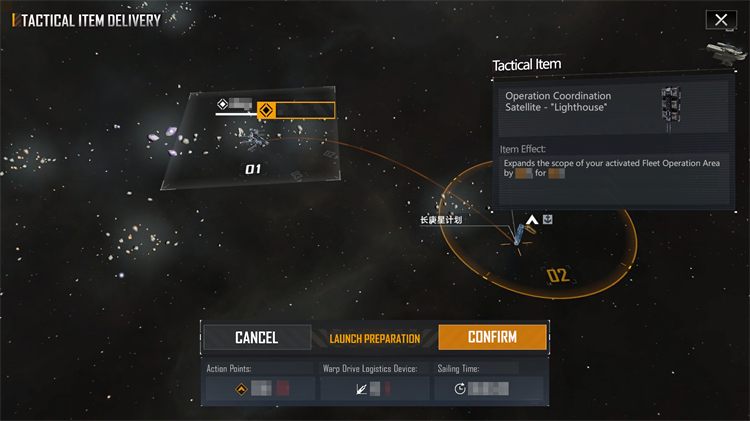
6. Operation Coordination Satellite, when deployed to activated operations, boosts the command capability of the fleet and temporarily broadens the operation's scope.
 

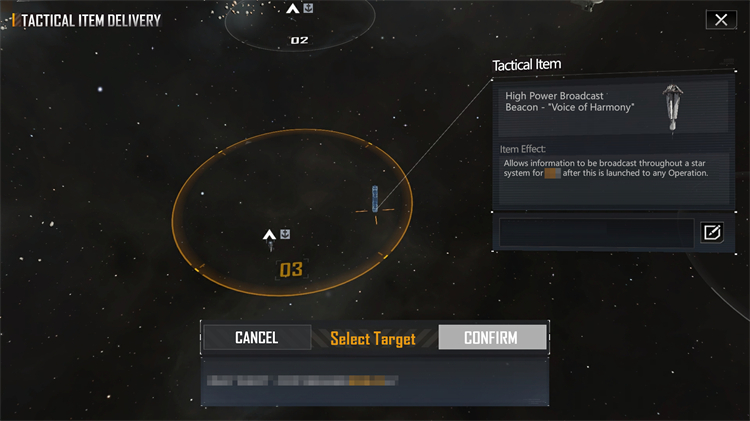
7. High Power Broadcast Beacon can transmit messages to the designated airspace. All Explorers within the area can view the broadcast information on the Expanse map.
 

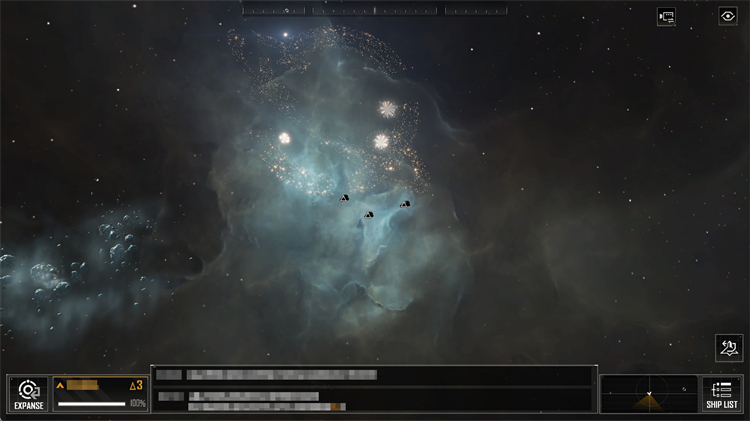
8. Festive Plasma UAV Squadron and Mobile Plasma UAV Squadron can be delivered to buildings and fleets, performing continuous plasma UAV shows around targets.
 

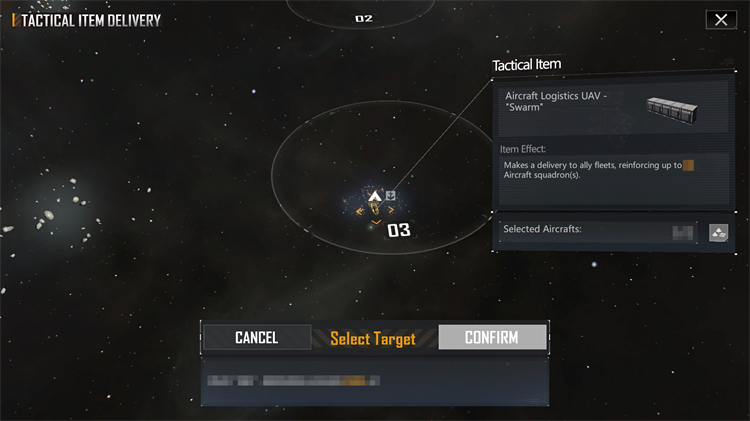
9. Aircraft Logistics Device can be utilized to send aircraft from the base to friendly fleets, thereby reinforcing these fleets.
 

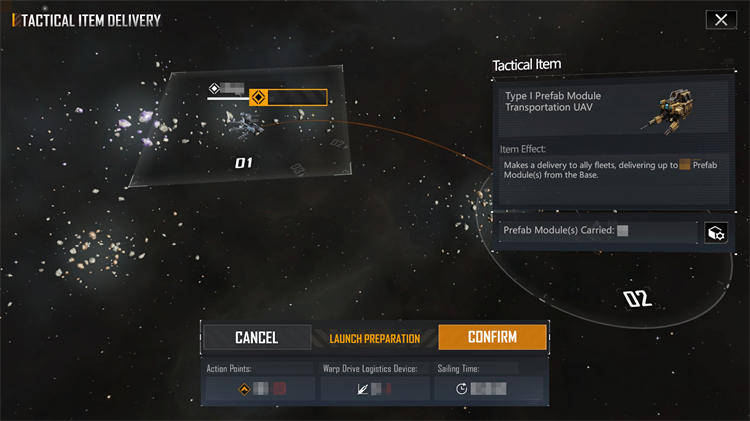
10. Prefab Module Transportation UAV can be utilized to send Prefab Modules from the base to friendly fleets.
 

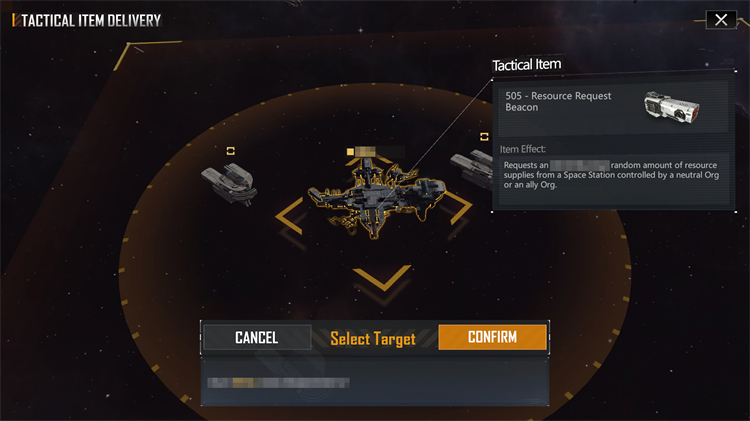
11. Resource Request Beacon can signal the Space Station for refined Resource Packs, the quantity of which is randomly determined.
 

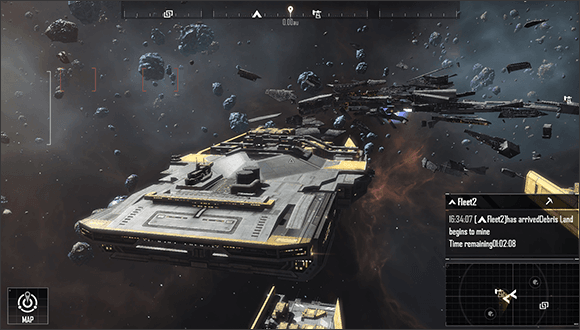
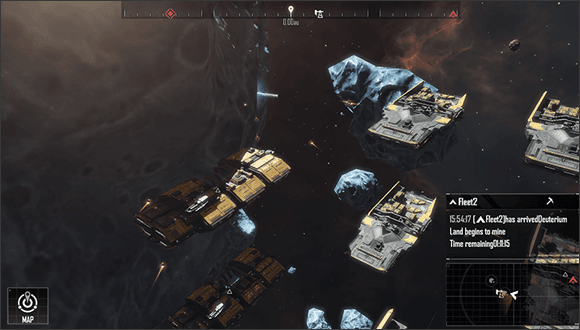
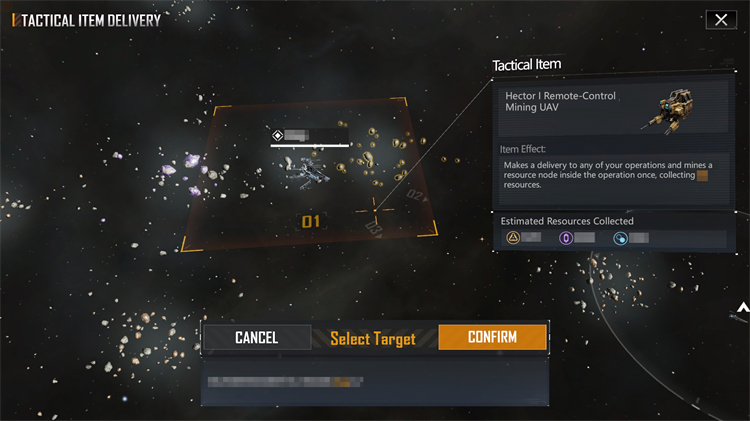
12. Remote-Control Mining UAV, when delivered to the operation, enables one-time mining of resource nodes within the targeted operation.
 

Equipment Details Description

Equipment, when installed on the Explorer's base, provides bonus effects or grants special abilities to the base.


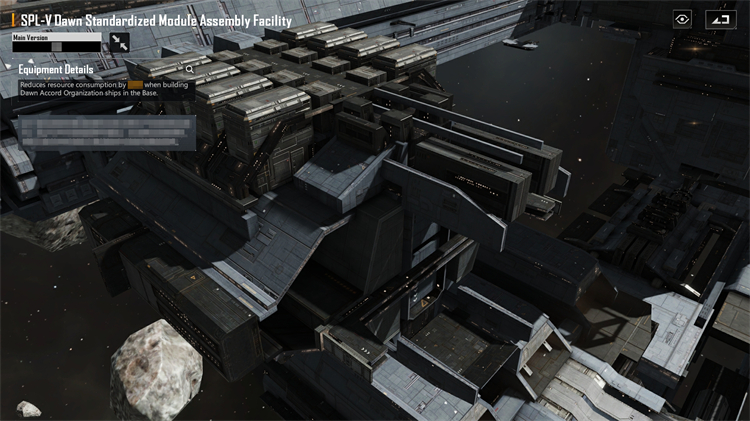
1. Parts Assembly Facility falls into four categories: Dawn Standard, Antonios, Jupiter Industries, and NOMA Shipping Group. These facilities enhance ship production procedures and decrease resource usage when producing ships for respective companies.
 

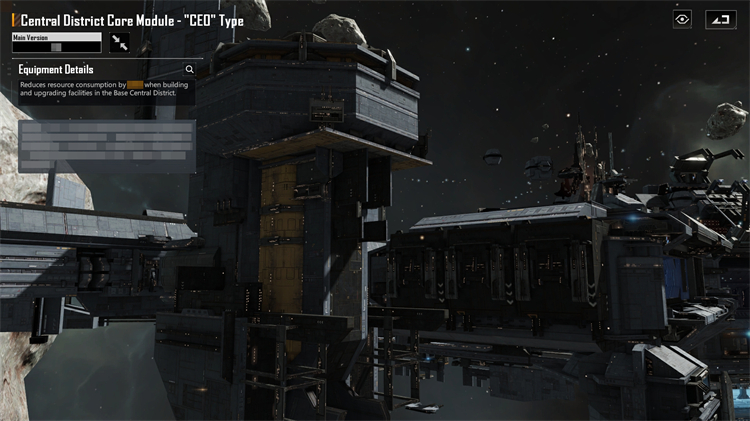
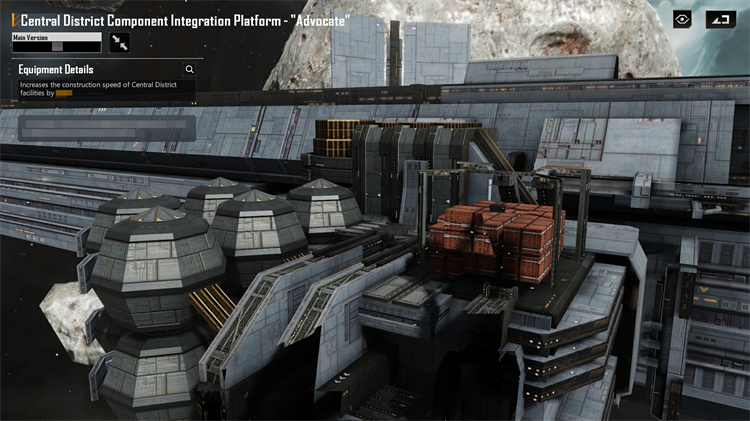
2. Core Module and Component Integration Platform are categorized into three types: Central District, Industrial District, and Port District. They streamline facility construction projects and lessen resource usage as well as facility upgrade time when enhancing facilities in their respective areas.


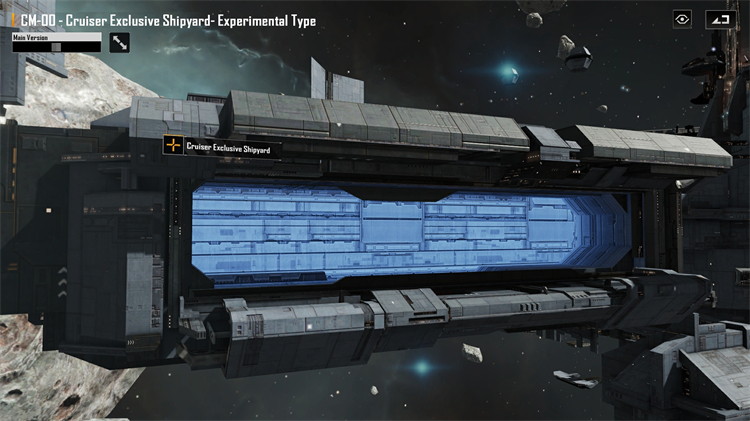
3. Cruiser Exclusive Shipyard adds extra production lines specifically for cruiser manufacturing.
 

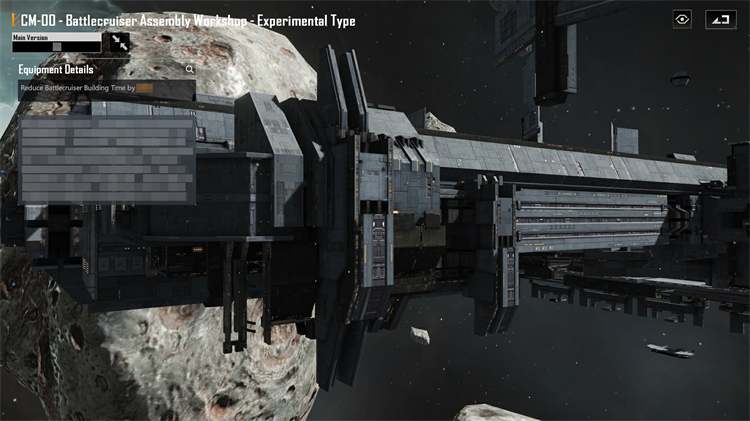
4. Battlecruiser Assembly Workshop refines the battlecruiser production process, reducing the time taken for manufacturing.
 

5. Ship Production Coordination Controller aids in managing the production line and raises the maximum limit of the production queue.
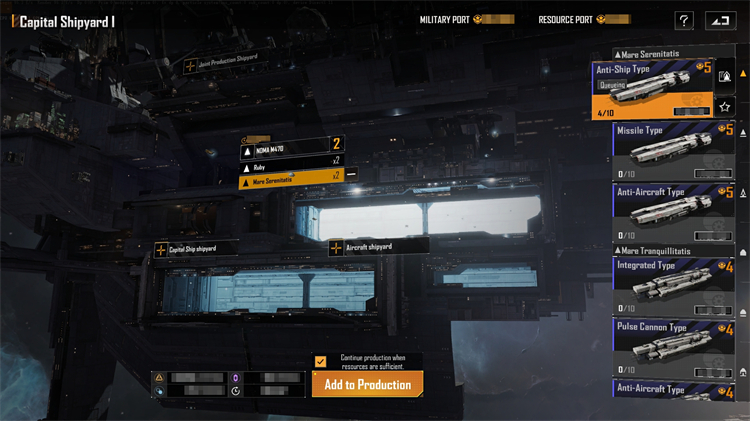
 

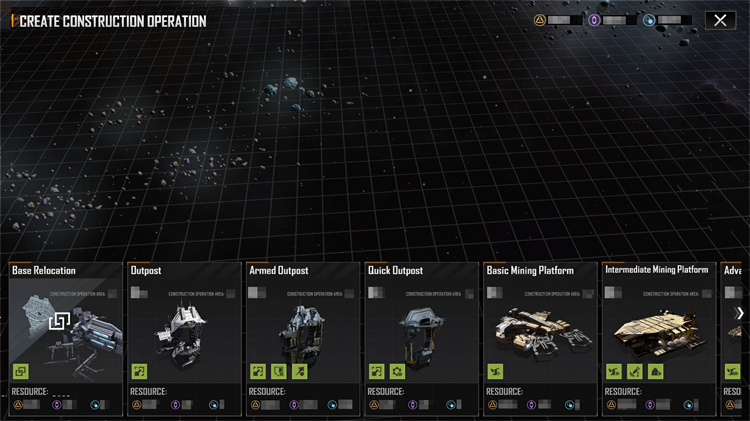
6. Outpost Control Core enables outpost construction, with the type of outpost varying based on the control core utilized. Armed Outpost has superior HP and enhanced defensive firepower; Quick Outpost requires less construction time, whereas, Large Outpost offers a more expansive Operation Area.
 

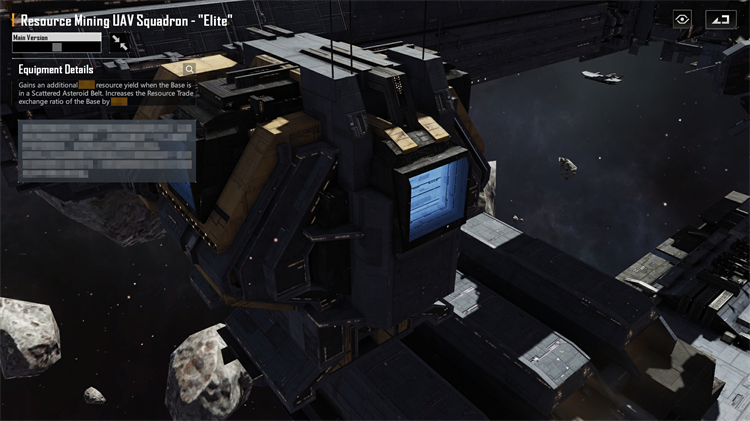
7. When located in a Scattered Asteroid Belt, Resource Mining UAV Squadron enhances the base's resource yield and resource exchange rate.
 

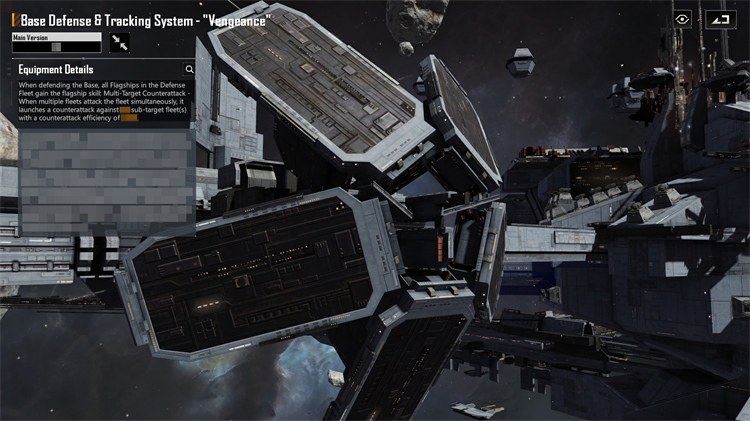
8. Base Defense & Tracking System aids in managing enemy fleet data when the base is under attack, equipping the base defense fleet with the capability to counter multiple enemy fleets.
 

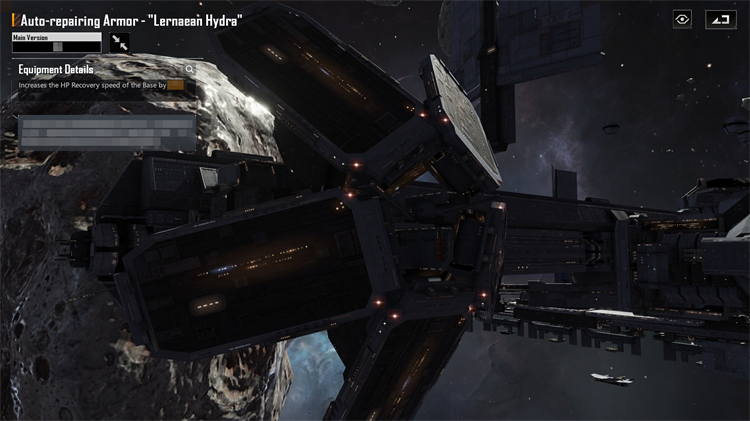
9. The Auto-repairing Armor accelerates the base's maintenance process, boosting the recovery rate of its HP.
 

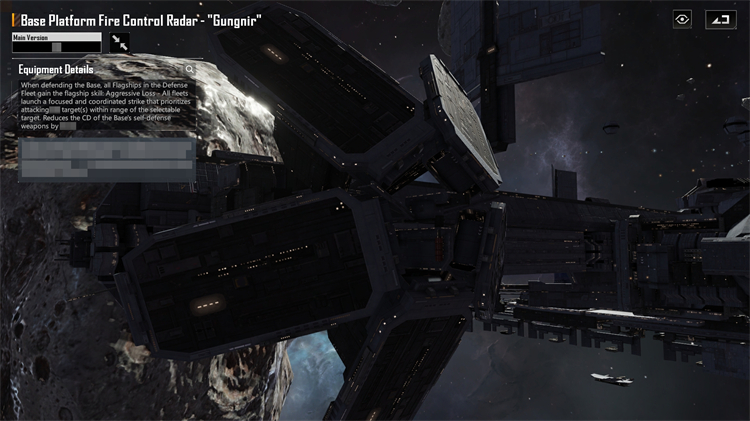
10. Base Platform Fire Control Radar aids in managing the base defense fleet's firepower, focusing fire on enemy vessels during base attacks.
 

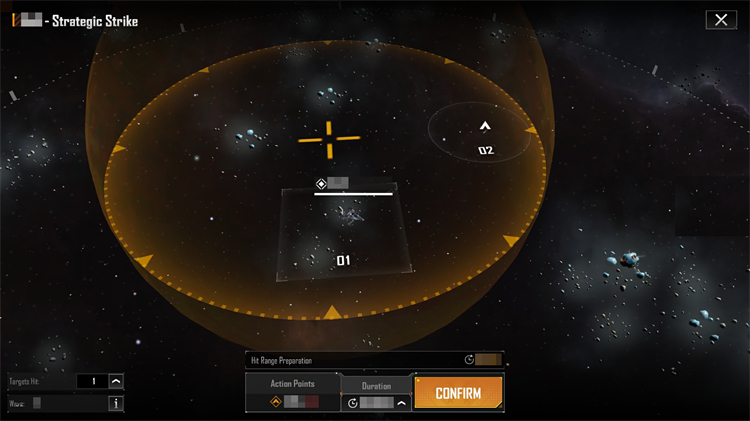
11. BVR Aircraft Guidance Devices can steer Fighters housed in the Defense hangar, empowering the base to execute strategic strikes.
 

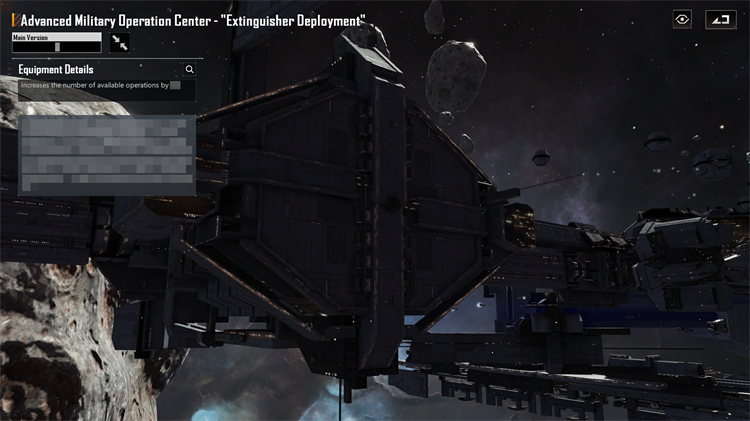
12. Military Operation Center enhances operational management capabilities and expands the maximum number of operations that can be conducted.
 

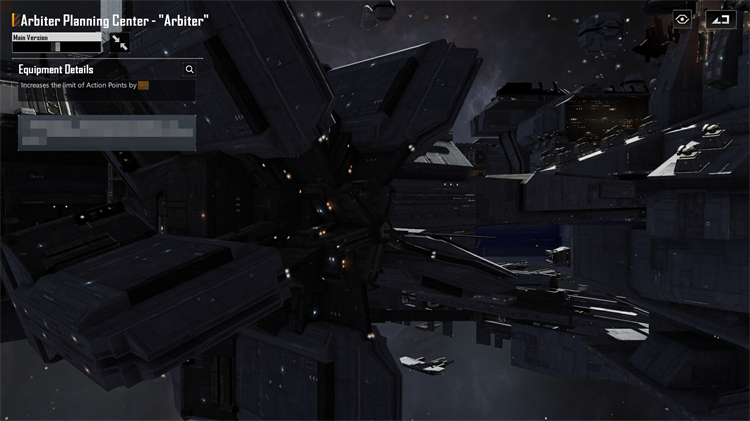
13. Arbiter Planning Center can raise the maximum storage capacity for Action Points.
 

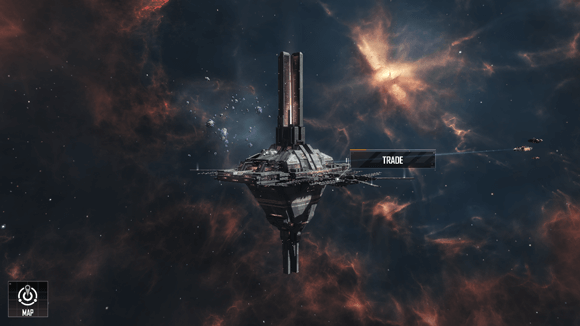
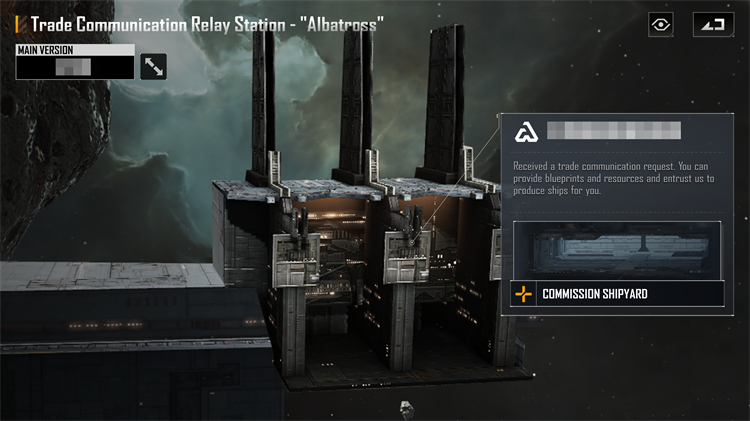
14. Trade Communication Relay Station enables the issuance of production orders, permitting galactic factions to manufacture ships on your behalf.
 

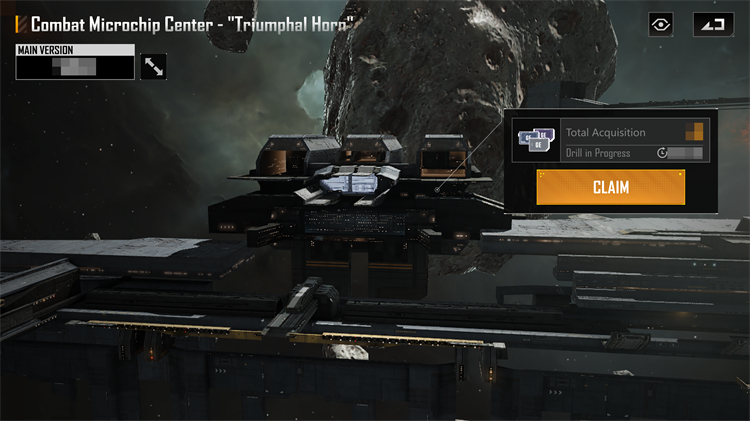
15. Combat Microchip Center supports simulated combat exercises, generating Combat Microchips that enhance blueprint EXP.
 

pic
pic
pic
pic
pic
pic
pic
pic
pic
pic
pic
pic
pic
pic
pic
pic

pic
pic
pic
Background Information (Stellar Storm)

Later in the Galactic War, the star HD232b at the center of the Fire Seeker System had an abnormal emission of high radiation, affecting almost the entire star system. Above 70% of the cities, space stations, buildings, and fleets system-wide received severe damage, so did the protection facilities of the L893 Gate, making the stargate unable to run. The stellar emission phenomenon continues till now, and the entire star system has already been classified as a "Danger Zone." Some factions even closed the relevant nodes connecting to the Fire Seeker System in the Lagrange Network.

Background Information (Stellar Storm)

In the following decades, this phenomenon occurred and caused widespread devastation in multiple star systems. According to the Report on the Reasons for High Radiation Emission in Some Star Systems and their Network Loss Situation, there are abnormal changes in space warping at the Lagrange points. It may affect the gravity at the core of stars, lead to the high-energy emission from the interior of them irregularly, and thus cause severe damage to the entire star system. This phenomenon is academically called "Space Warping Vibration," also commonly known as "Warping Reverberation."

Gameplay Rules (Stellar Storm)

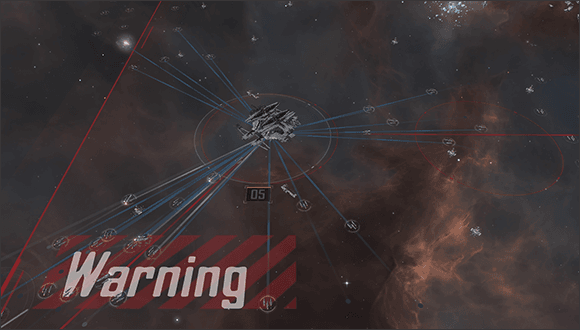
From the intel we have, there is a set pattern for the abnormal stellar activity. It can be divided into the Rising stage, Peak stage, and Declining stage. The scope of the radiation zone in a star system will change with the intensity of the stellar activity. During their abnormal activity, stars emit lots of high radiation at intervals hindering the operation of cities, space stations, and fleets. Some of the planets can block stellar jets so that the areas behind them are not susceptible to the high-energy emission from stars. You can take these areas as your security zones.

Background Information (Data Rescue)

The Antonios Consortium was also affected by the disaster. Some of the star systems run by them have already begun to have "Space Warping Vibration." Radiation of high levels is emitted at irregular intervals, affecting the star system environment. The consortium's management decided to transfer the valuable assets out of these star systems, including large amounts of experiment data, as soon as possible. Therefore, the Data Rescue Agreement has been issued to recruit experienced explorers to rescue experiment data from these star systems fulls of dangers.

Gameplay Rules (Data Rescue)

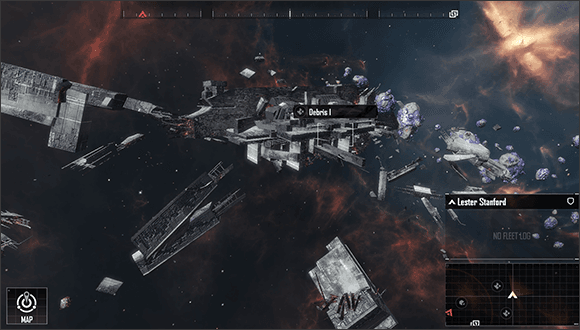
As the buildings in different star systems will become ruins after being continuously damaged by high radiation jets, it is necessary to rescue and migrate the important data stored in the Experimental Center and the Observation Station as soon as possible. Once the space station turns to ruins, it will no longer be able to house and support the crew as it used to. However, there will still be lot of resources, repairable shipwrecks and important experimental data to be recovered by explorers. These undiscovered data in the ruins are the focus of all forces in the star systems in their hunt.

Background Information (Data Rescue)

The "Project Garden" planetary ecological transformation experimental program led by the Antonios Consortium has been carried out in five phases on hundreds of star systems, but some star systems are difficult to survive due to abnormal Stellar Activities that lead to the deterioration of the galactic environment. Most areas of those star systems have been abandoned, and many important data were buried in the ruins. \nThe goal of this agreement is to rescue planetary experiments and observation data from deserted star systems that were affected by the "warping reverberation".

Wishful Light Story

As more and more star systems began to build Lagrange Gates in the same way (launch a large number of beacons for testing the safety and pressure of passing the nodes), such a scene appeared in star systems one after another. In the heat of developing Lagrange Nodes, the "Beacon Festival" began to spread to every corner of the galaxy.
"Twinkle twinkle little star, how I wonder what you are?"
—A popular lullaby in Terran Sphere

Wishful Light Story

During the beacon test phase of the "Otherworld Project", beacons were continuously launched into space. These beacons traveled through the under-studied Lagrange Nodes to explore and record star systems on the other side, collecting a lot of valuable data and information for exit positioning experiments. After decades of full preparation, at the beginning of the Phase II implementation, 2,347,260 huge beacons with long life were continuously launched into the channel to test the stability and pressure capacity of the channel. Seen from the ground, these huge beacons formed streaks of light in the sky that kept shining for a whole year. So the people on earth gave them a poetic name: Wishful Lights.