Caro comandante:
Para proporcionar uma experiência de jogo melhor, os servidores de Infinite Lagrange passarão por uma manutenção em 2021/8/11 7:00 (UTC) , com duração aproximada de 1.5 h. O jogo não estará disponível durante esse período. Pedimos paciência e compreensão durante a manutenção.
Siga-nos nas redes sociais:
https://www.facebook.com/infinite.lagrange.eu/
Discord
https://discord.com/invite/infinitelagrange
As atualizações são descritas a seguir:
1. Lançamento oficial do sistema estelar central na Rede Lagrange:
a. Adicionamos Pontos de Prestígio da União nas recompensas da avaliação de desenvolvimento:
Na avaliação de desenvolvimento, uma União receberá 2 Pontos de Prestígio da União para cada 1% de ocupação. Você não pode receber Pontos de Prestígio da União por uma ocupação inferior a 1% Se a União estiver ocupando o portal, você recebe 40 Pontos de Prestígio da União adicionais.
Depois do lançamento oficial do jogo, cada União receberá Pontos de Prestígio da União de acordo com sua ocupação final nas avaliações de desenvolvimento do sistema estelar.
Depois da manutenção, Uniões que já haviam recebido avaliações ganharão Pontos de Prestígio da União automaticamente, de acordo com os resultados das suas avaliações prévias.
b. Adicionamos uma nova jogabilidade sobre compra de propriedades no sistema estelar central
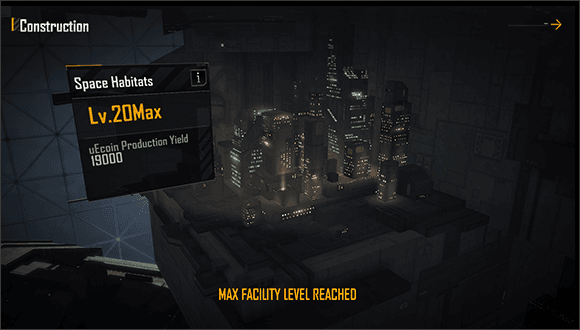
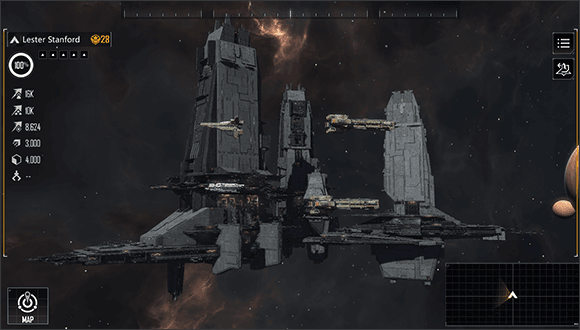
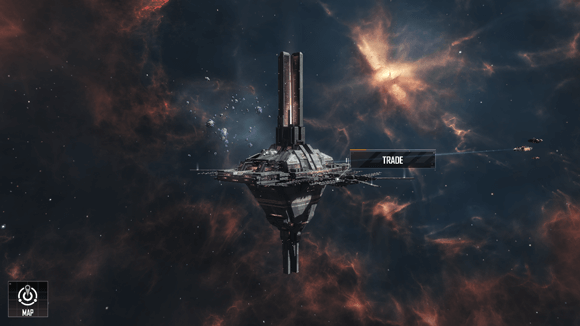
Após o planejamento e a construção da Cidade de Antontias, dezenas de propriedades no "Porto dos Pioneiros" ficaram disponíveis para que Uniões as escolham como sua sede. Além disso, cada União que retornar ao sistema estelar central terá uma sede da União temporária, próxima à Cidade de Antontias.
Uniões que receberam Pontos de Prestígio da União na avaliação de desenvolvimento podem usá-los para comprar uma propriedade na Cidade de Antontias, para servir como sua sede da União e aproveitar a vista ímpar da cidade.
O número de Pontos de Prestígio da União necessários para a compra de propriedades varia entre as diferentes localizações. Quando uma União comprar uma propriedade, esse local automaticamente se tornará a sede da União.
Membros da União podem compartilhar informações estratégicas, checar o status da exploração e ver o cenário da cidade na sede.
c. Adicionamos a função de chat ao sistema estelar central:
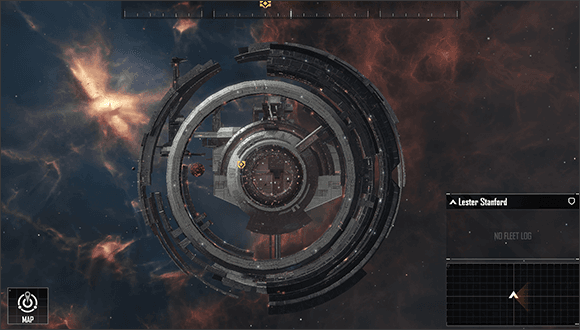
Logo após a avaliação de desenvolvimento, você atravessará o portal para voltar ao sistema estelar central, que agirá como o terminal de transferência da exploração do novo sistema estelar.
Durante sua estadia no novo sistema estelar central, você poderá se comunicar com outros exploradores que estão retornando de outros sistemas estelares, pelo canal local.
2. Otimizamos as regras de exibição de emblemas na tela de Perfil Pessoal.
Correção de bugs:
1. Corrigimos um bug em que os números das versões dos cosmoplanos não se alteravam corretamente.
2. Corrigimos um erro em que os efeitos visuais da melhoria do Sistema de Controle de Danos Integrado da Lança de Urano–Cruzador de batalha pesado não eram exibidos, embora os atributos em si não fossem alterados.
Later in the Galactic War, the star HD232b at the center of the Fire Seeker System had an abnormal emission of high radiation, affecting almost the entire star system. Above 70% of the cities, space stations, buildings, and fleets system-wide received severe damage, so did the protection facilities of the L893 Gate, making the stargate unable to run. The stellar emission phenomenon continues till now, and the entire star system has already been classified as a "Danger Zone." Some factions even closed the relevant nodes connecting to the Fire Seeker System in the Lagrange Network.
In the following decades, this phenomenon occurred and caused widespread devastation in multiple star systems. According to the Report on the Reasons for High Radiation Emission in Some Star Systems and their Network Loss Situation, there are abnormal changes in space warping at the Lagrange points. It may affect the gravity at the core of stars, lead to the high-energy emission from the interior of them irregularly, and thus cause severe damage to the entire star system. This phenomenon is academically called "Space Warping Vibration," also commonly known as "Warping Reverberation."
From the intel we have, there is a set pattern for the abnormal stellar activity. It can be divided into the Rising stage, Peak stage, and Declining stage. The scope of the radiation zone in a star system will change with the intensity of the stellar activity. During their abnormal activity, stars emit lots of high radiation at intervals hindering the operation of cities, space stations, and fleets. Some of the planets can block stellar jets so that the areas behind them are not susceptible to the high-energy emission from stars. You can take these areas as your security zones.
The Antonios Consortium was also affected by the disaster. Some of the star systems run by them have already begun to have "Space Warping Vibration." Radiation of high levels is emitted at irregular intervals, affecting the star system environment. The consortium's management decided to transfer the valuable assets out of these star systems, including large amounts of experiment data, as soon as possible. Therefore, the Data Rescue Agreement has been issued to recruit experienced explorers to rescue experiment data from these star systems fulls of dangers.
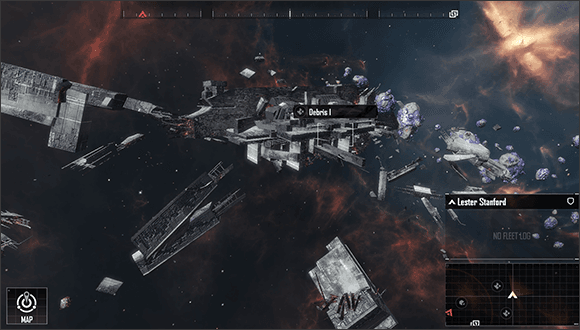
As the buildings in different star systems will become ruins after being continuously damaged by high radiation jets, it is necessary to rescue and migrate the important data stored in the Experimental Center and the Observation Station as soon as possible. Once the space station turns to ruins, it will no longer be able to house and support the crew as it used to. However, there will still be lot of resources, repairable shipwrecks and important experimental data to be recovered by explorers. These undiscovered data in the ruins are the focus of all forces in the star systems in their hunt.
The "Project Garden" planetary ecological transformation experimental program led by the Antonios Consortium has been carried out in five phases on hundreds of star systems, but some star systems are difficult to survive due to abnormal Stellar Activities that lead to the deterioration of the galactic environment. Most areas of those star systems have been abandoned, and many important data were buried in the ruins. \nThe goal of this agreement is to rescue planetary experiments and observation data from deserted star systems that were affected by the "warping reverberation".
As more and more star systems began to build Lagrange Gates in the same way (launch a large number of beacons for testing the safety and pressure of passing the nodes), such a scene appeared in star systems one after another. In the heat of developing Lagrange Nodes, the "Beacon Festival" began to spread to every corner of the galaxy.
"Twinkle twinkle little star, how I wonder what you are?"
—A popular lullaby in Terran Sphere
During the beacon test phase of the "Otherworld Project", beacons were continuously launched into space. These beacons traveled through the under-studied Lagrange Nodes to explore and record star systems on the other side, collecting a lot of valuable data and information for exit positioning experiments. After decades of full preparation, at the beginning of the Phase II implementation, 2,347,260 huge beacons with long life were continuously launched into the channel to test the stability and pressure capacity of the channel. Seen from the ground, these huge beacons formed streaks of light in the sky that kept shining for a whole year. So the people on earth gave them a poetic name: Wishful Lights.


Privacy Policy, Terms and Conditions
©1997-2024 NetEase, Inc.All Rights Reserved
Contact Us: lagrange@global.netease.com
Privacy Policy, Refund Policy


